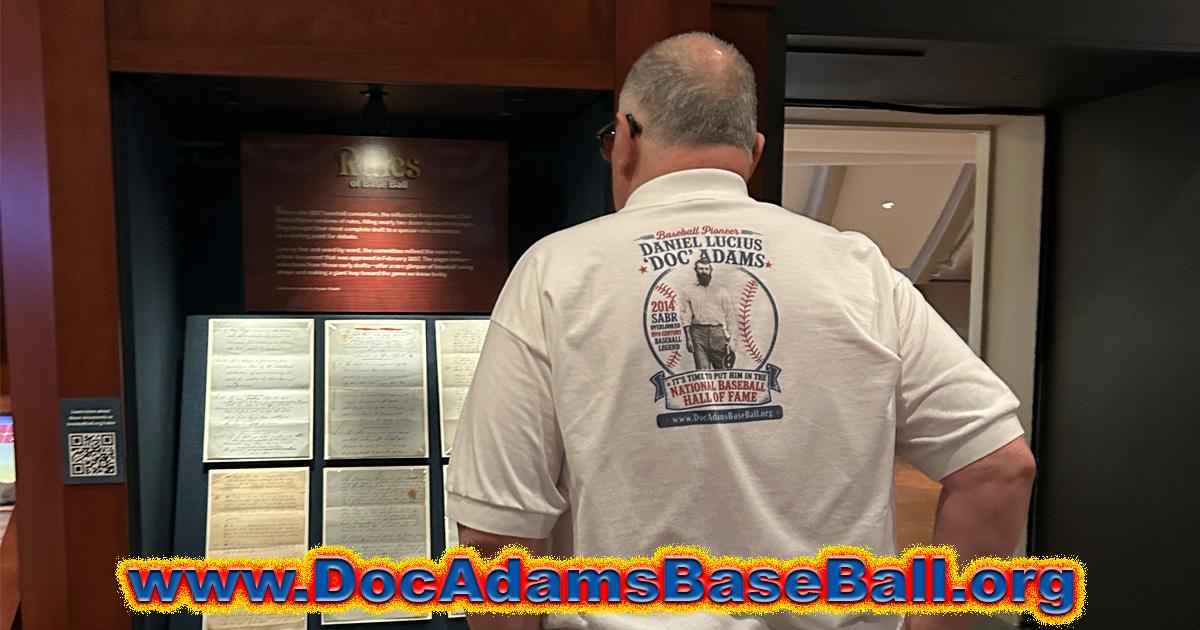
A Talk Rekindles The Debate Over Baseball’s Founders
In its May 25, 2026 issue, The New Yorker published “Hall of Shame” (“Baseball’s Magna Carta Finds a New Home” online) by Ben McGrath. The article chronicled a presentation delivered by Frank Murray, former owner of Doc Adams’ handwritten “Laws of Base Ball”, at the Round Hill Club in Greenwich, Connecticut.
McGrath recounts how Murray acquired the historic manuscript for approximately $12,000 in 1999 and traces its remarkable journey to its eventual sale for $3.26 million.
The article also revisits the growing historical case for Daniel Lucius ‘Doc’ Adams and his pioneering role in the development and standardization of baseball.
Murray, along with the current owner of the ‘Laws’, Hayden Trubitt, Doc Adams’ great-great grandson, Nathan Adams Downey and his sister, Anne Downey, and several of Adams’ supporters were on hand for the ‘Laws’ debut in Cooperstown.
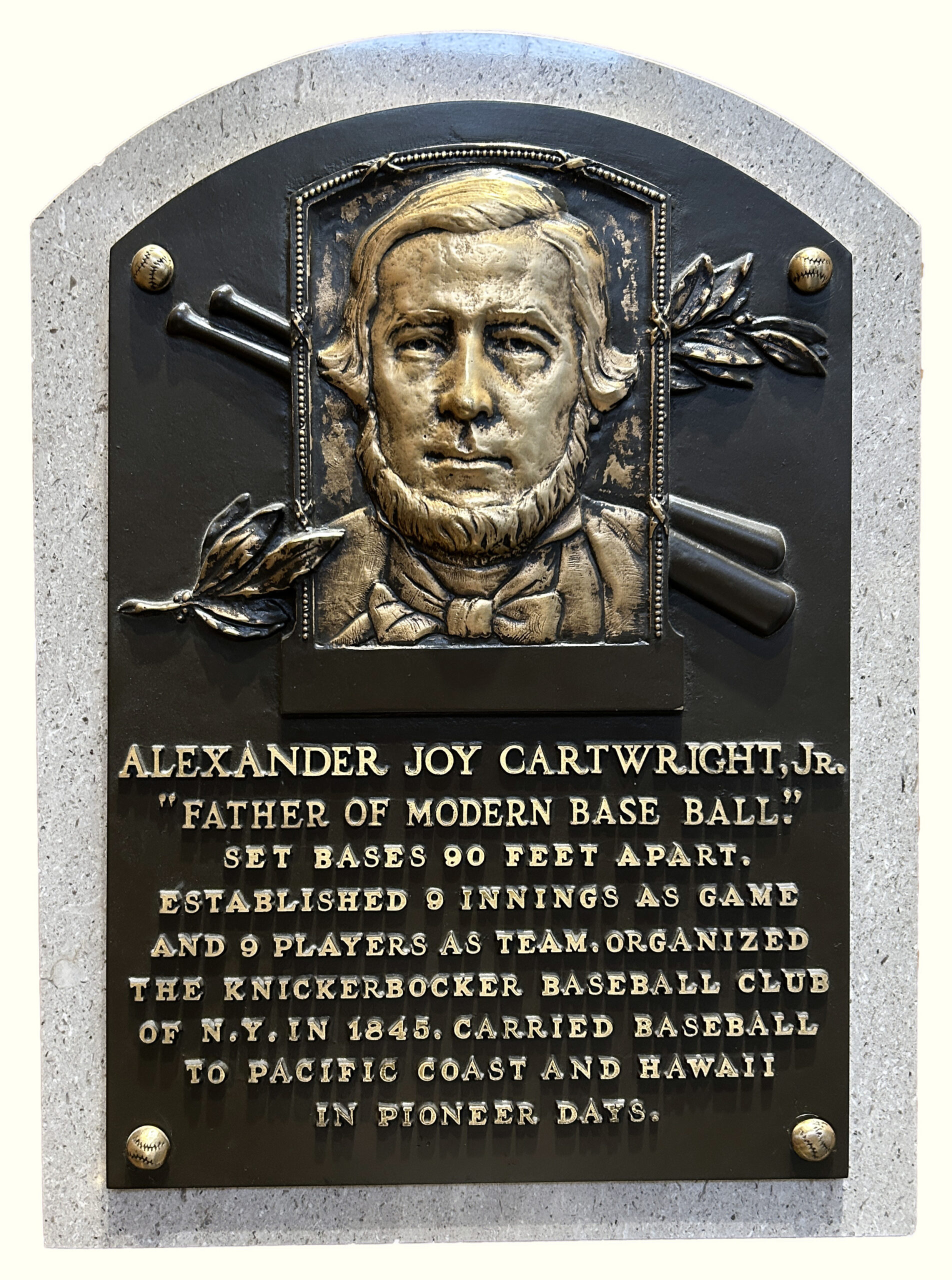
He showed a slide to his guests with an image of the Hall of Fame plaque honoring Alexander Cartwright, a Knickerbocker founder, as the “Father of Modern Base Ball” and crediting Cartwright with establishing crucial standards that remain in place today: nine innings, nine fielders, ninety feet between bases. “None of that’s true,” Murray said.
“Baseball’s Magna Carta Finds a New Home”, The New Yorker, Ben McGrath
[Frank] Murray explained that Cartwright moved to California in 1849, chasing gold. “And then he failed out there and decided to move to Hawaii,” Murray said. “He had nothing to do with the modern rules.”
“Baseball’s Magna Carta Finds a New Home”, The New Yorker, Ben McGrath
“I really need to shame them into doing the right thing. They won’t do it unless they’re embarrassed.” [Frank Murray]
“Baseball’s Magna Carta Finds a New Home”, The New Yorker, Ben McGrath
The presentation was also featured in the Greenwich Sentinel article, “The Hand That Drew Baseball’s Lines” by Elizabeth Barhydt. This piece traces the journey of the Laws—from Frank Murray’s acquisition of the documents to their current display at the National Baseball Hall of Fame. It also explores, in far greater depth than the Hall’s exhibit, the history and significance of the 1857 documents discussed in Murray’s presentation. Notably absent from the exhibit itself is the name of Doc Adams. One curious aspect with the article is that it while it discusses Doc Adams’ handwritten draft of the Laws, the accompanying photograph depicts one of the pages written by William Grenelle rather then Adams’ manuscript.
One can only wonder why the Hall of Fame remains reluctant to identify the authors of these historic documents: the original draft penned by Adams, the formal convention copy prepared by William Grenelle, and a third related document also written by Grenelle. Given the significance the Hall now attributes to these materials, acknowledging the individuals who actually created them would seem both appropriate and historically necessary.
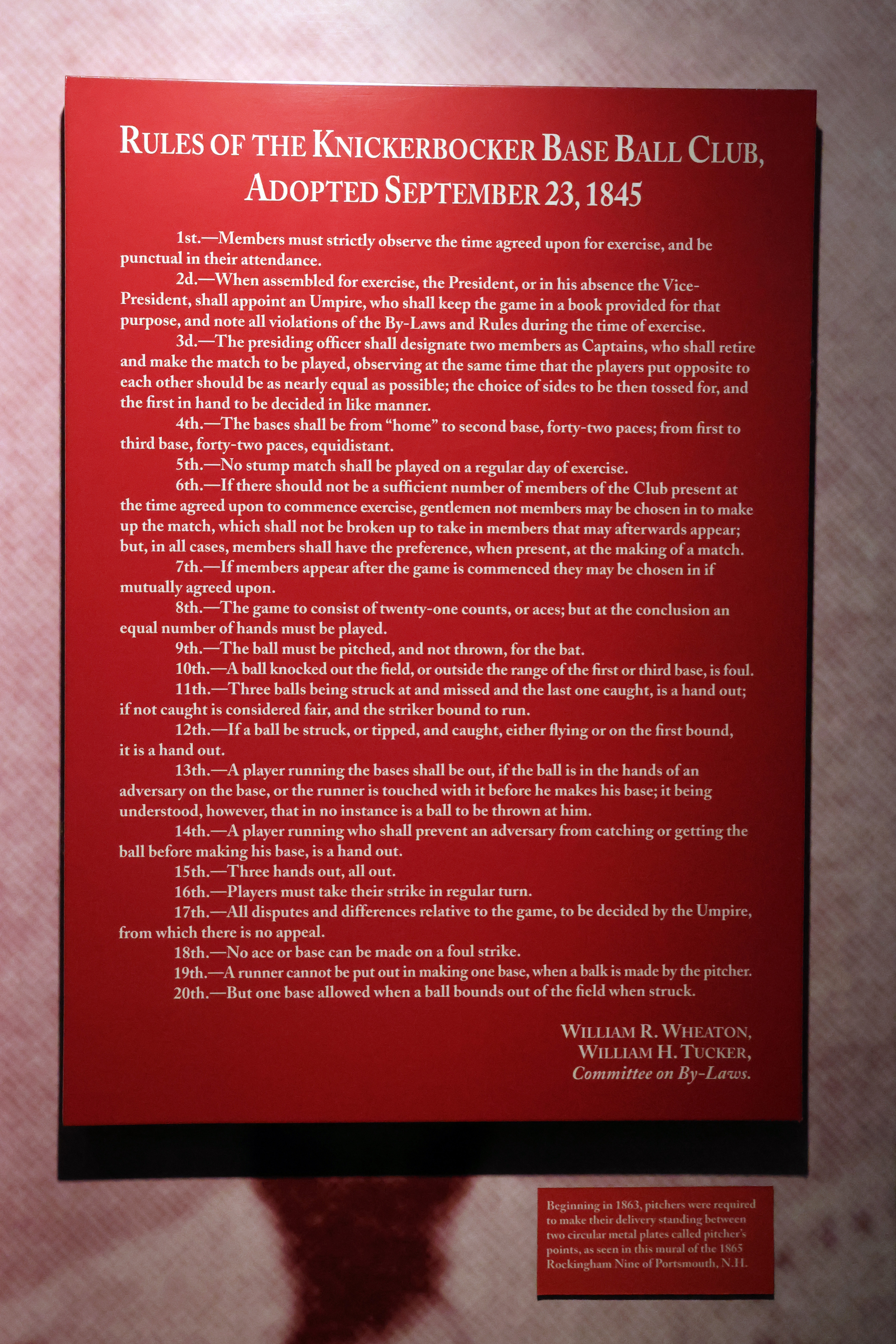
The Hall of Fame has no problem identifying the authors of the original Knickerbocker Rules: William R. Wheaton and William H. Tucker.
The Hall of Fame, however, has no hesitation in proclaiming Alexander Cartwright the:
“Father of Modern Baseball”
“Set bases at 90 feet apart.
“Established 9 innings as the game and 9 players as team.”
Yet each of these claims is demonstrably false. Historical evidence shows that the 90-foot basepaths, nine-inning games, and nine-man teams emerged through a gradual process of development and standardization. Despite this, the Hall continues to present these assertions as fact while remaining reluctant to acknowledge the documented authorship of the 1857 Laws of Base Ball by Doc Adams and the convention copies prepared by William Grenelle.
Discover more from Doc Adams Base Ball (Official)
Subscribe to get the latest posts sent to your email.