
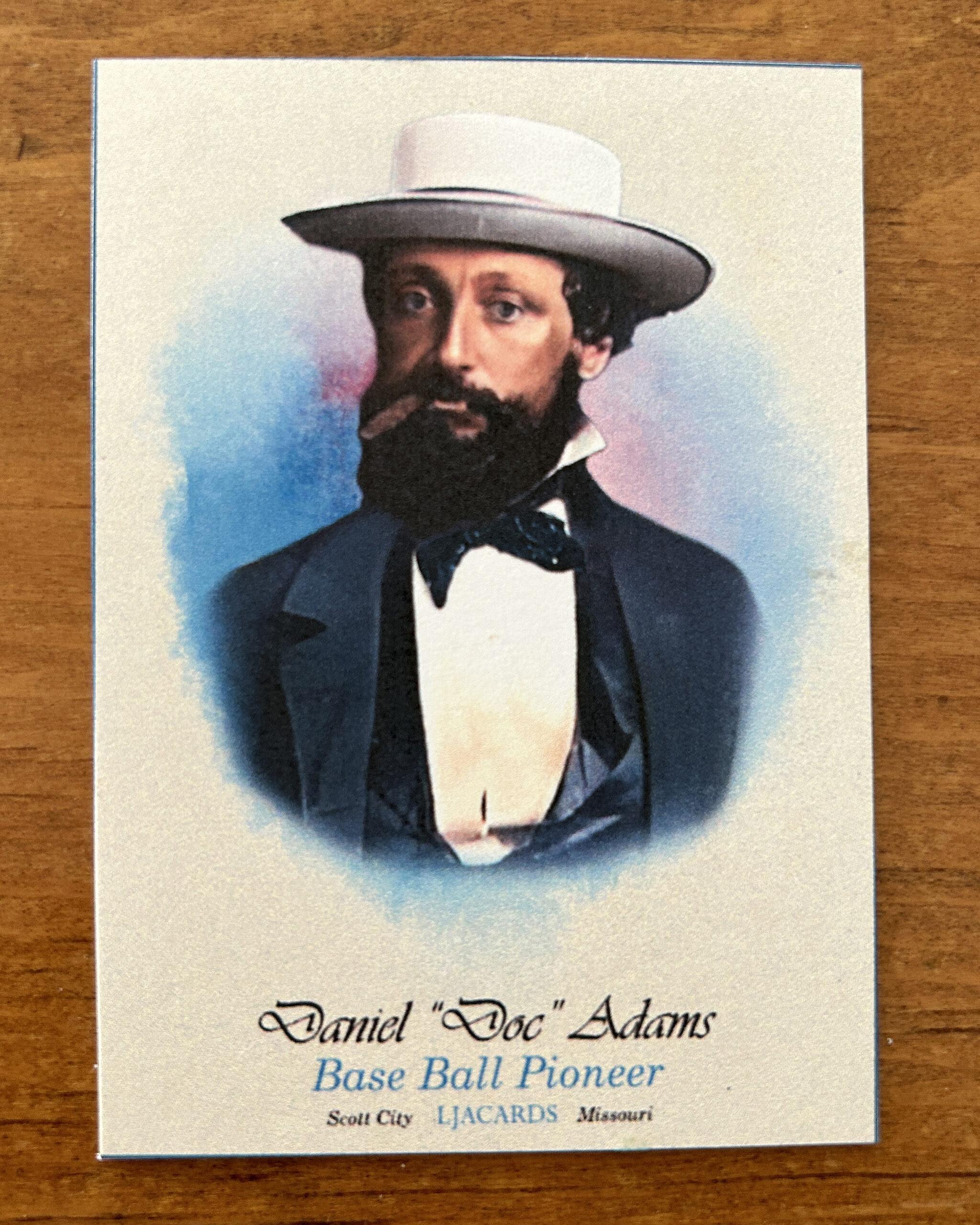

I added a new Doc Adams card to my collection. It is from the 2024 LJA Cards “Pioneers of Base Ball the 1800s” set.
Hopefully, there will be more to come, including a Hall of Fame plaque card.
The #1 source for bespoke custom trading cards
LJACards, eBay
All of LJACards’ Custom Trading Cards are original artworks crafted by us. We take inspiration from historical designs and images to create something new. Each card is made by hand, ensuring that every one is unique.
With a background in Anthropology and Historic Preservation, my goal is to celebrate history in a fun and collectible way. I focus on highlighting overlooked or forgotten sets and subjects, bringing attention to the importance of preserving our shared past
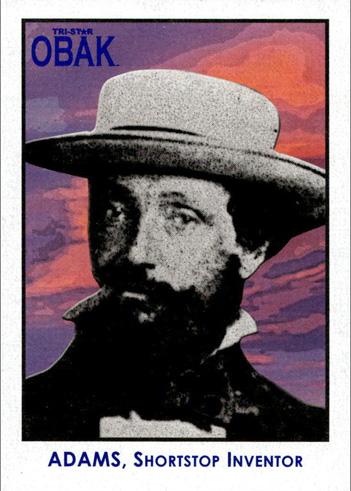
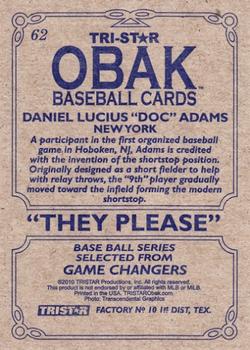
It joins my Tri-star Obak #62 card from the “Game Changers” subset of the set their 2010 set.
“At first glance, this year’s edition of TRISTAR’s Obak seems like your standard retro-styled card set — it’s modeled after a line of early 1900s tobacco cards of the same name and the cards look like they could have been pulled out of a pack of cigarettes years ago.
However, a closer look at the checklist offers a history lesson in the game not seen anywhere else — and there’s no tobacco (or even bubble gum) included.”
“In all, there are 39 cards in the 120-card set dedicated to those whose place in the game is inherently not between the white lines on the field. While those cards may not carry a whole lot of monetary value, they all tell a story about a small piece of the game.”
“Obak cards look at game changers”, Chris Olds, ESPN
Ars Longa is the Latin translation of a phrase from an aphorism written by the ancient Greek physician Hippocrates. The aphorism contains the phrase: ars longa, vita brevis, which is commonly translated as “Art is long, Life is short.” The Doc Adams card is contained in their C19 Series.

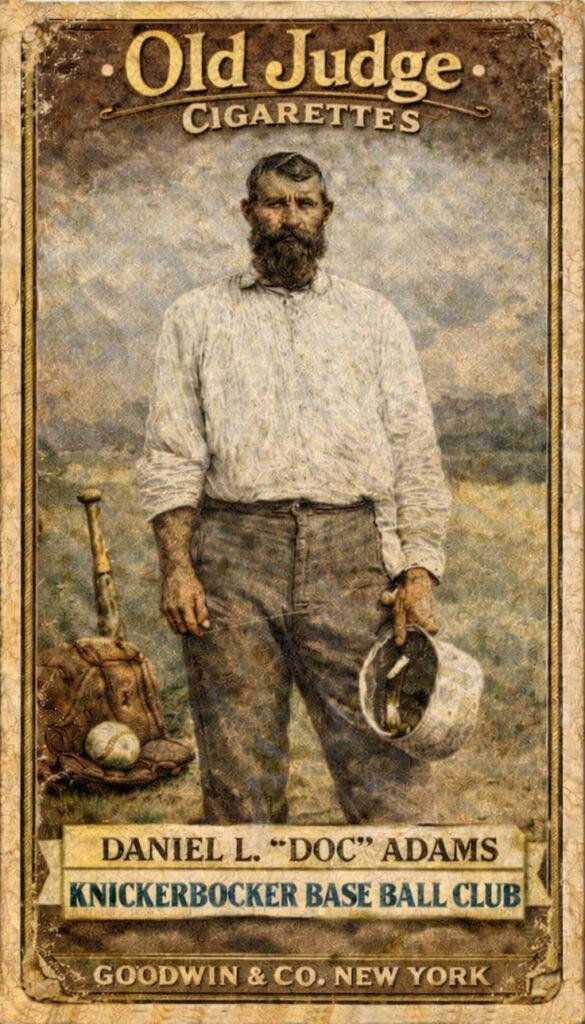
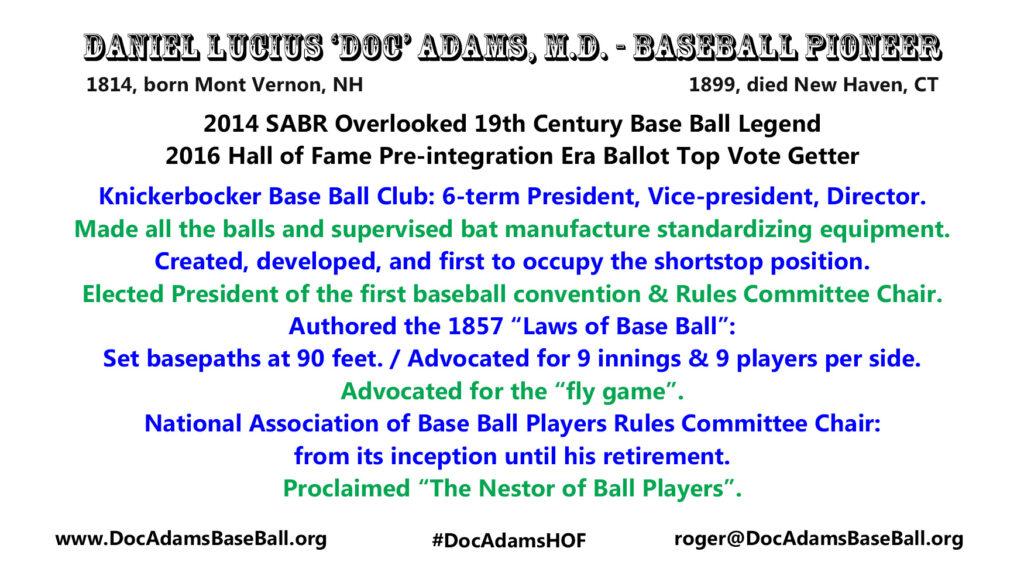
Baseball cards have been important to the sport because they helped turn baseball from a local pastime into a national obsession.
In the late 19th and early 20th centuries, cards gave fans a way to see, collect, and remember players, especially in an era before television. They helped create some of the game’s first true celebrities by putting faces, names, teams, and statistics into people’s hands. In that sense, baseball cards didn’t just reflect the sport — they marketed it.
They also preserved baseball history. For many early players, cards are among the clearest surviving visual records of their careers and public image. That makes them valuable not only to collectors, but also to historians.
Finally, cards deepened fan engagement. They encouraged kids and adults alike to follow rosters, trades, batting averages, and legends of the game. In a real way, baseball cards helped teach generations of fans how to know baseball.
Therefore, what better way to briefly tell the story of Doc Adams.